The $2,400 DIN-Rail Lesson: Why Open-Frame vs Enclosed Power Supplies Is Not a Price War
2026-09-18 · Kwame Boateng
I'm a quality and brand compliance manager at Delta Plc. I review every power supply specification before it reaches customers—roughly 200+ SKUs annually. In 2024, I rejected 18% of first deliveries because of documentation and spec mismatches. Most of those rejections come down to one uncomfortable truth: we treat power supplies like commodities until something fails.
This is the story of a hybrid AC/DC microgrid control cabinet that taught me the difference between open-frame vs enclosed power supplies. It cost us $2,400 in overtime and one very awkward customer call. The lesson was cheaper than a full recall, but not by much.
February 2024: The panel that looked fine on paper
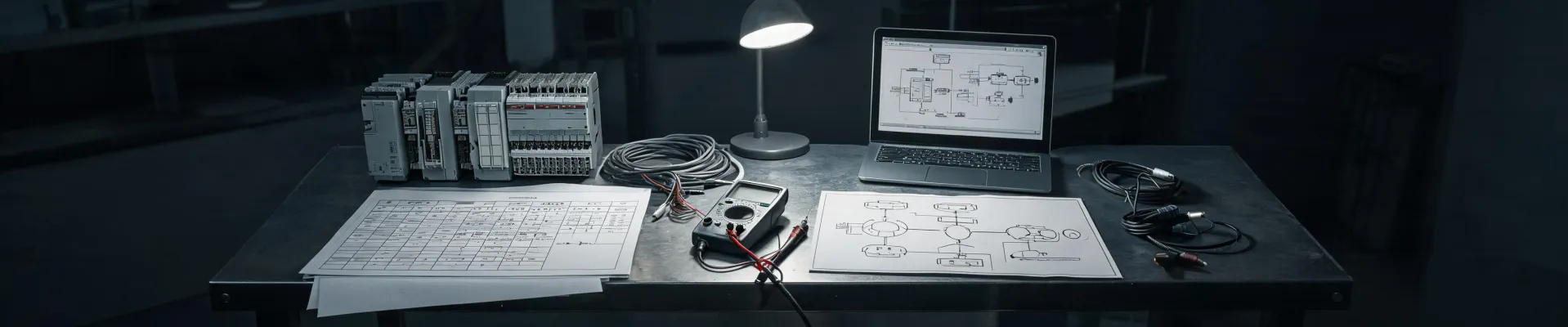
We were building a control cabinet for a packaging OEM. The system had a hybrid AC/DC microgrid setup: AC input from the grid, a DC bus for renewables and battery storage, and a small 19 inch rack for network gear. Inside the cabinet, we needed 24 V DC for PLCs, HMIs, sensors, relays, and contactors. Standard stuff.
My initial approach to power supplies was completely wrong. When I first started reviewing specs, I assumed that if two DC power supply units matched voltage and current, the cheaper one was the better buy. So when procurement found open-frame 24 V, 10 A units at about $65 less per unit than enclosed DIN-rail models, I didn't push back hard enough.
I also let a bad idea survive too long. Someone on the team asked why we didn't just use a Cooler Master 550 watt power supply for the cabinet. It was cheap, available, and everyone had one on a bench somewhere. I said we could keep one for bench testing. That was fine. What wasn't fine was the fuzzy line between bench testing and production thinking.
The spec sheet didn't ask the right questions
On paper, open-frame vs enclosed looked like a housing preference. Both can deliver 24 V DC. Both can meet a current rating. But an open-frame unit has no enclosure, no finger-safe terminals, and no dedicated thermal path. It relies on the cabinet for protection and airflow. An enclosed industrial DIN-rail power supply has its own housing, terminals, mounting clip, and often a DC OK relay.
Here's the detail that matters: EN 60715 defines the DIN rail profile. It doesn't define whether the device mounted to that rail can survive conductive dust, vibration, or a 50°C cabinet ambient. That's on your spec.
EN 60715 defines the rail. It does not define the environment.
We also had a certification blind spot. Many PC power supplies, including ATX units like a Cooler Master 550 watt power supply, are designed around ITE or AV safety standards, often UL 62368-1. Industrial control panels typically call for UL 508 Listed or recognized components. They are not the same environment. I'm not saying one is junk—I'm saying the listing and construction need to match the application.
For the hybrid AC/DC microgrid side, we assumed the DC bus would be clean. It wasn't. Open-frame supplies can be fine in clean, controlled enclosures, but they don't automatically include the filtering and isolation you need when AC and DC grounds are sharing a cabinet. IEC 62477-1 covers safety for power electronic converter systems, but it doesn't design your grounding scheme for you. IEEE 1547 is relevant when you interconnect distributed energy resources, but it's not a power supply selection guide.
April 2024: The failure that changed the spec
The April 2024 failure changed how I think about power supplies. We were in production ramp when the packaging line started dropping PLC communication. The HMI flickered. A contactor chattered. We swapped cables, checked firmware, and blamed the network. Then we opened the cabinet and saw the real problem.
The open-frame DC power supply unit was coated in conductive dust from a nearby carbon black process. Not a lot—just enough to bridge a few tight spaces. The output drifted under load. The PLC dropped. We lost six hours of production, paid $2,400 in overtime, and missed a shipment window.
Surprise, surprise: the $65 per unit we saved on the open-frame supply didn't look like savings anymore. Three units, about $195 saved, against $2,400 in direct overtime. That doesn't count the customer relationship cost or the engineering time.
We replaced the open-frame units with enclosed industrial DIN-rail power supplies. We specified wide input range, DC OK signaling, proper derating at 50°C, and UL 508 listing. For the 19 inch rack power supply, we kept a rack-mount unit but added redundant feeds and moved it away from the DC bus noise. The Cooler Master 550 watt power supply stayed on the bench, clearly labeled as a test unit. It's a fine PC power supply. It's not an industrial control panel component.
What we changed in the standard
After the rework, I rewrote our internal power specification. It's not perfect, but it's saved us from repeating the same mistake.
- For cabinet interiors, default to enclosed industrial DIN-rail power supplies. Open-frame is only allowed in clean, controlled, finger-safe enclosures with forced air and a documented maintenance plan.
- For hybrid AC/DC microgrid cabinets, separate AC and DC grounding, add surge protection, and check isolation between the DC bus and control electronics. If the microgrid interconnects with the utility, review IEEE 1547 requirements with the power engineer.
- For 19 inch rack power supplies, specify airflow direction, redundancy, and hold-up time. Don't assume a rack unit is immune to the same thermal issues as a DIN-rail unit.
- For any DC power supply unit, compare ripple, hold-up, derating curves, terminal type, and certifications—not just watts and price.
That last point is the one procurement teams push back on. I get why. Budgets are real. Unit price is easy to compare. Total cost of ownership is messy. But the messy number is the one that shows up on the P&L.
What I learned about value over price
My first year in quality, I made the classic rookie mistake: I approved a batch of power supplies because the datasheet matched the voltage and current. I didn't ask about the environment. I didn't ask about the certification. Cost us a redo. I'd like to say I never did it again. I did—just with more expensive consequences.
The numbers said go with open-frame. My gut said the cabinet environment was too dirty. I went with the numbers. The numbers were wrong.
To be fair, open-frame power supplies have a place. In high-volume OEM products with controlled enclosures, they can save space and cost. I'm not anti-open-frame. I'm anti-assumption. The question isn't open-frame vs enclosed. The question is: what happens when this power supply fails?
If the answer is a nuisance alarm on a bench, open-frame might be fine. If the answer is six hours of lost production, a missed shipment, and a quality audit finding, then the cheapest option isn't cheap.
In my opinion, the industrial DIN-rail power supply is not a commodity. It's a reliability component. The same goes for a 19 inch rack power supply in a control room, and the same goes for a DC power supply unit feeding a hybrid AC/DC microgrid. You can buy on price, or you can buy on downtime risk. You can't optimize for both at the same time.
Now every contract includes environmental and certification requirements. I still review 200+ SKUs a year. I reject more first deliveries than I used to. That's the trade. Fewer field failures, fewer 2 a.m. calls, and no more debates about using a Cooler Master 550 watt power supply in a production cabinet.

Kwame Boateng
Kwame Boateng is a transformer and power-conversion analyst specializing in distribution transformers, power supplies, inverters, and network integration. He uses IEC 60076 test data for transformer ratio, impedance, losses, and temperature rise, and IEC 62477-1 safety requirements for converter insulation and thermal boundaries while separately comparing harmonics and efficiency curves. He helps engineers and sourcing teams compare equipment against duty profiles, environmental limits, short-circuit behavior, lifecycle energy cost, and service requirements.